In This Article
What Kind of Cider Will This Year’s Apples Make?
First things first: How is the 2026 apple crop looking?
The apple calendar is your fall calendar
But here’s where cider gets really interesting
The best cider apple might be a terrible lunchbox apple
New Hampshire has some fascinating apples
Some apples are destined for pie. Some are destined for cider. Some can do both.
So…what will the 2026 apples taste like in cider?
Weather has a lot to say about the final cider
And 2026 has already given New Hampshire growers a challenge
Want to understand cider? Visit an orchard.
From New Hampshire orchard to Rhythm Cider
What Kind of Cider Will This Year’s Apples Make?
source: Crucial 10 Cider
There is something magical about the first apple of the season.
You walk into a New Hampshire orchard in late summer and suddenly the calendar changes. The air gets a little cooler. The days get a little shorter. The first red apples begin to appear among the leaves.
And you know what’s coming. Fall. For us, that’s the beginning of Cider Season.
From Labor Day through Thanksgiving, we’re celebrating everything we love about New Hampshire’s fall: apples, orchards, farms, harvests, foliage, festivals, food—and the cider that brings it all together. But there’s a question we think is even more interesting than “When can I pick apples?”
What kind of cider are these apples going to make?
Because here’s something most people don’t realize:
The apple you love to eat isn’t necessarily the apple a cidermaker loves to ferment. And the apples growing in New Hampshire right now are about to tell us what kind of cider we’ll be drinking for the next year.
First things first: How is the 2026 apple crop looking?
The honest answer, as we enter Cider Season, is:
It depends on the orchard.
That’s actually one of the fascinating things about growing apples in New Hampshire. Weather can vary considerably from one part of the state to another, and an apple crop can be affected by everything from winter temperatures and spring frosts to rainfall, insects, disease and the timing of bloom. And 2026 has given New Hampshire apple growers something extra to think about.
An April freeze affected apple-producing regions across the Northeast, and on August 17 the USDA’s Risk Management Agency extended special emergency procedures for freeze-damaged apples to New Hampshire and several other states. Earlier in the spring, UNH Extension was already reporting evidence of freeze damage in New Hampshire orchards, including damage to spur leaves that could affect fruit development and thinning decisions.
That doesn’t mean New Hampshire won’t have plenty of apples this fall. It means 2026 is another reminder that every harvest is a collaboration between farmers and Mother Nature. And that’s part of what makes local agriculture so interesting.
The harvest has already begun
If you’re reading this around Labor Day, the apple harvest isn’t waiting for the calendar. Some of New Hampshire’s earliest varieties are already arriving.
At Apple Hill Orchard in Concord, 2026 harvest dates range from late July and August varieties such as Ginger Gold, Premier Honeycrisp, Gala and Arlet through September varieties such as Jonaprince, Mutsu and Jonagold, and all the way into October for varieties including Evercrisp, Fuji, Granny Smith, GoldRush and Pink Lady.
At Carter Hill Orchard, pick-your-own apples begins Labor Day weekend in 2026, with Paula Red already available in the farm market.
And at Tellman Hill Farm in Whitefield, the 2026 apple season begins September 4, with early varieties including Ginger Gold, William’s Pride, Sansa and Zestar followed by SnowSweet in mid-September.
That’s one of the great things about New Hampshire’s apple season:
It isn’t one harvest. It’s a parade. One variety arrives. Then another. Then another. And another.
The apple calendar is your fall calendar
Want to know what fall tastes like? Follow the apples.
Early September might bring you Ginger Gold, Paula Red, William’s Pride and McIntosh-type apples. Then come varieties such as Cortland, Honeycrisp, Jonagold and Mutsu. Later in the season, you’ll find apples such as Macoun, Northern Spy, Winesap, GoldRush and other late-season varieties. The exact timing changes every year—and even individual orchards can vary—but that’s part of the fun.
The New Hampshire Fruit Growers Association maintains a directory of apple farms throughout the state, making it a great resource for finding an orchard near you.
And if you’re visiting an orchard, don’t just ask:
“What’s ready?”
Ask:
“What’s different this week?”
You might be surprised.
But here’s where cider gets really interesting
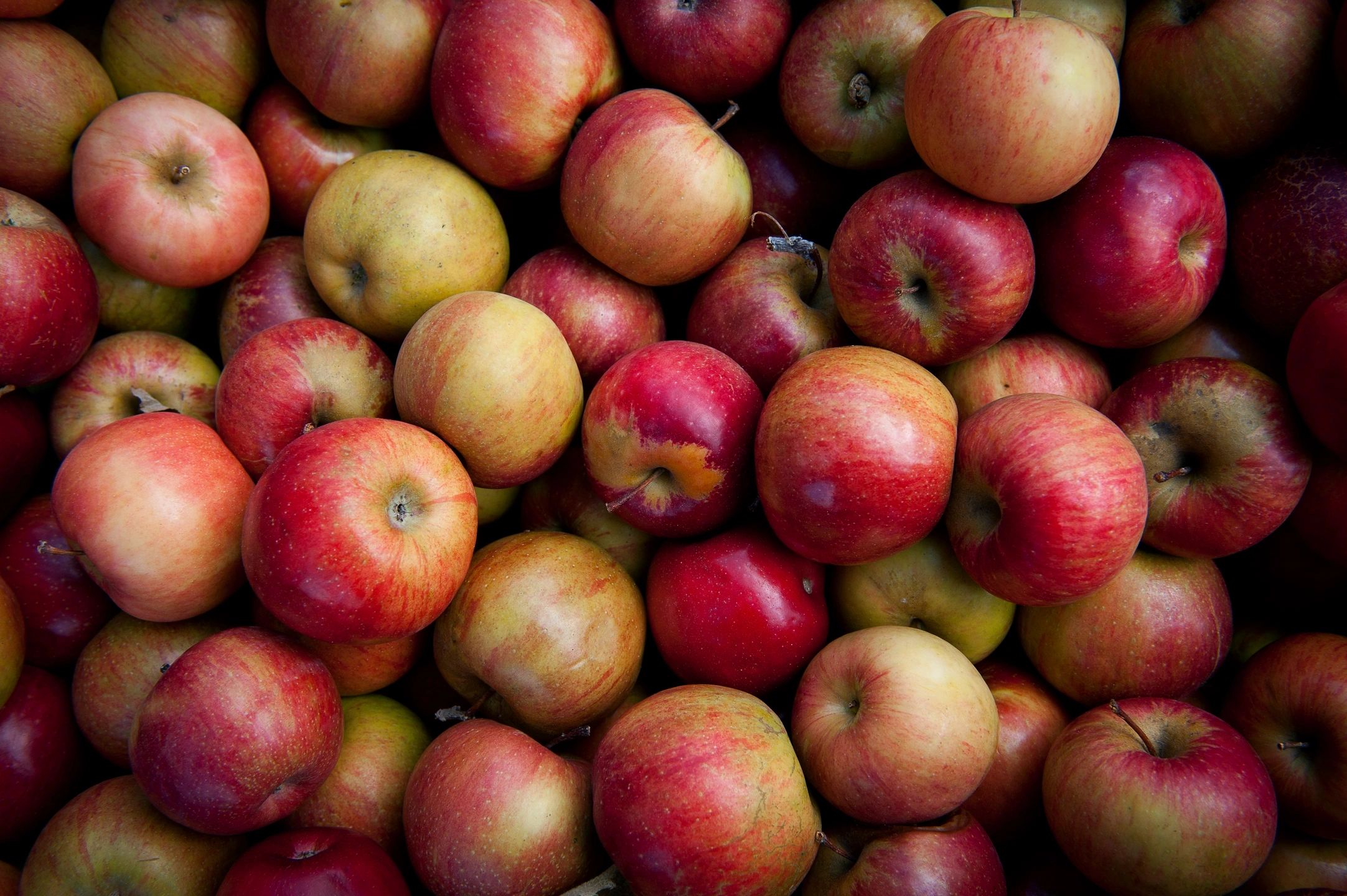
Imagine you walk into an orchard and see 30 different kinds of apples. You might immediately gravitate toward Honeycrisp. It’s crisp. It’s juicy. It’s sweet. It’s delicious. But if you’re making cider, you might walk right past it.
Why?
Because a great cider isn’t necessarily looking for an apple that tastes great by itself. A cidermaker is looking for balance. That means apples that contribute things like:
Sugar
Provides the fermentable material that yeast turns into alcohol.
Acidity
Gives cider its refreshing, mouthwatering quality.
Tannin
Adds structure, texture and sometimes a little grip on the palate.
Aroma
Provides the apple character you actually smell and taste in the finished cider.
Flavor
Everything from citrus and tropical fruit to honey, spice, flowers and earthy notes.
The magic happens when those characteristics come together.
The best cider apple might be a terrible lunchbox apple
This is one of our favorite cider facts. Some of the apples prized by cidermakers aren’t particularly appealing as a snack. They’re too tart. Too tannic. Too small. Too bitter. Too intense. Or simply too weird. And that’s exactly why they’re interesting.
A cider apple can be a little bit like a spice in the kitchen. You wouldn’t necessarily sit down and eat a spoonful of it—but add the right amount to a blend and suddenly everything becomes more interesting. That’s why traditional cider makers have historically paid attention to apple varieties that were classified as sweet, sharp, bittersweet or bittersharp.
It’s all about what they bring to the blend.
Think of cider like wine
If you’re a wine drinker, this is probably starting to sound familiar.
A winemaker doesn’t simply ask:
“Is this grape delicious?”
They ask:
“What does this grape contribute to the wine?”
That’s the same way a cidermaker looks at apples. One variety might bring acidity. Another brings tannin. Another brings aroma. Another brings sugar. Put them together and you can create something much more interesting than any of them could produce on their own. And sometimes you don’t blend them at all. You let one apple speak for itself.
That’s the idea behind single-variety cider.
New Hampshire has some fascinating apples
One of the great things about living in New England is that we’re surrounded by apple history. Some varieties have been grown here for generations. Others were discovered here. And some have almost disappeared.
The Hampshire Mac, for example, is a McIntosh-type apple discovered in Contoocook, New Hampshire. It ripens later than a traditional McIntosh, helping extend the New England McIntosh season. That’s a pretty cool piece of New Hampshire agricultural history. And it illustrates something important:
Our orchards aren’t just growing apples. They’re preserving genetics, history and flavor.
Some apples are destined for pie. Some are destined for cider. Some can do both.
Walk through a New Hampshire orchard and you’ll hear a lot about what each apple is “good for.” Eating. Baking. Sauce. Storage. And, increasingly: Cider.
At Apple Hill Orchard, for example, the 2026 harvest stretches across dozens of varieties, from early-season apples through late varieties such as GoldRush and Pink Lady.
At Applecrest Farm Orchards in Hampton Falls, New Hampshire’s oldest and largest apple orchard, more than 40 varieties of apples are grown alongside peaches, berries, vegetables and other crops. The farm also produces its own fresh apple cider.
And at Patch Orchards in Lebanon, a family has been farming the same land since 1775, growing apples including Honeycrisp, Fuji, Gala, McIntosh, Macoun, Cortland, Empire and others.
That’s a lot of apples. And a lot of possibilities.
So…what will the 2026 apples taste like in cider?
Here’s where we have to make a confession:
We don’t know yet. And that’s the fun part. A cider maker doesn’t simply pick up an apple in September and know exactly what the finished cider will taste like.
First, we have to see what the fruit gives us. How much sugar? How much acid? How much tannin? How aromatic is it? How does the juice taste? How does it ferment? And perhaps most importantly:
What happens when we put it together with other apples?
That’s where cider making becomes part science, part agriculture and part art.
Weather has a lot to say about the final cider
The growing season doesn’t just determine how many apples an orchard produces. It can influence how those apples taste. Temperature, sunlight, rainfall and timing all affect fruit development. And the harvest date matters, too. An apple picked a little early can have a very different balance than one allowed to mature longer on the tree.
That’s why cidermakers pay attention to the orchard throughout the entire growing season. We’re not just waiting for September. We’re watching the apples.
And 2026 has already given New Hampshire growers a challenge
The April freeze is an important part of this year’s story.
USDA’s August 17 announcement specifically expanded emergency procedures for freeze-damaged apples in New Hampshire, recognizing that the April weather event had affected apple growers in the state.
UNH Extension’s regular 2026 fruit reports have also been tracking the growing season, including frost effects, disease pressure, fire blight and other issues growers have had to manage. By July, UNH reported that fire blight was visible in some orchards, although infections appeared minimal at that point.
For consumers, it’s easy to look at an apple and see a piece of fruit. For a farmer, every apple represents months of work—and a lot of things that were completely out of their control. That’s another reason we love harvest season.
It’s a chance to appreciate where our food comes from.
Want to understand cider? Visit an orchard.
Seriously. Pick an apple. Taste it. Then pick another one. Taste that. Notice the differences. Is one more tart? More aromatic? More floral? More tannic? Sweeter? Crisper? Now imagine pressing 10 different varieties together.
That’s where you begin to understand what a cidermaker is trying to accomplish. And if you’re visiting New Hampshire this fall, there are plenty of places to start. The New Hampshire Fruit Growers Association’s member directory is a great statewide resource for finding orchards and farm stands.
In northern New Hampshire, Cardigan Mountain Orchard grows more than 1,000 apple trees and approximately 15 varieties, with mountain views and fresh cider as part of the fall experience.
And if you’re looking for a classic pick-your-own experience, Washburn’s Windy Hill Orchard opened for the 2026 season on August 29, with more than 700 apple trees, hayrides, cider donuts and a five-acre corn maze.
That’s what we mean when we say Cider Season. It’s bigger than the drink.
From New Hampshire orchard to Rhythm Cider
At Rhythm Cider, we spend a lot of time thinking about what happens between the orchard and the glass. Because the finished cider doesn’t begin in our tanks. It begins on a tree. It begins with a grower deciding what to plant. It begins with pruning. Pollination. Thinning. Weather. Sunshine. Rain. And eventually, someone walking through an orchard and deciding:
“These apples are ready.”
Then the real fun begins. The apples are pressed. The juice is evaluated. Fermentation begins. Time does its work. And eventually, we get to taste the result. Sometimes the apple gives us exactly what we expected. Sometimes it surprises us. And every once in a while, it gives us something that makes us say:
“We have to make this into cider.”
Your Cider Season challenge
This fall, we’d like you to try something.
Don’t just drink cider. Follow the apple. Visit an orchard. Pick an apple you’ve never tried. Ask what variety it is. Ask when it was harvested. Try a few different varieties side by side. Then visit a cidery and taste what happens when a cidermaker turns apples into something entirely different.
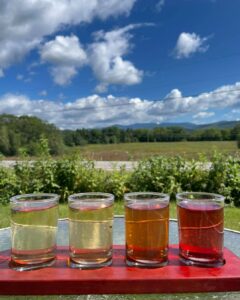
Try a dry cider. Try a sweet cider. Try a single-variety cider if you can find one. Try something barrel-aged. Try something you’ve never heard of. And then ask yourself: “What did the apple contribute?”
That’s when cider gets really interesting.
The 2026 harvest is just beginning
There is no single “New Hampshire apple.” There are hundreds of varieties, thousands of orchards, generations of farmers and an almost infinite number of ways to turn those apples into cider. And every harvest is different. That’s why we’re excited about Cider Season 2026.
Because somewhere in New Hampshire right now, an apple is hanging on a tree that will eventually become part of someone’s fall memory. Maybe it’ll become a pie. Maybe a cider donut. Maybe fresh-pressed cider. Maybe hard cider. Maybe something we haven’t even imagined yet.
That’s the beauty of harvest.
You don’t know exactly what the season is going to taste like until you take that first sip.
🍎 Go Find Some Apples
Want to experience the 2026 New Hampshire apple harvest for yourself?
Start here:
New Hampshire Fruit Growers Association — Find orchards and pick-your-own farms throughout the state.
Apple Hill Orchard — Concord — Follow the 2026 apple harvest as different varieties become available.
Carter Hill Orchard — Concord — Pick-your-own apples begins Labor Day weekend in 2026.
Tellman Hill Farm — Whitefield — A North Country orchard with an interesting lineup of early and mid-season varieties.
Applecrest Farm Orchards — Hampton Falls — More than 40 apple varieties at one of New Hampshire’s historic farm destinations.
Washburn’s Windy Hill Orchard — Greenville — Pick-your-own apples, hayrides, cider donuts and classic New Hampshire fall fun.
And when you’re ready to discover what happens after the apples leave the orchard, come visit us at Rhythm Cider in Lincoln.
The apple is where the story begins. Cider Season is where you get to taste it.