In This Article
What’s happening in the New Hampshire cider scene this year?
Cider in New Hampshire is no longer just “sweet apple cider”
The cider renaissance is happening at the farm
Single-variety cider is changing how we think about apples
New Hampshire’s forgotten apples are making a comeback
Farm cideries are becoming destinations
Cider is becoming an experience
The numbers tell an interesting story
Cider makers are pushing the boundaries
2026 is also a year to remember where New Hampshire cider came from
What’s happening in the New Hampshire cider scene this year?
 If you love New Hampshire, apples and a good glass of cider, 2026 is a pretty exciting year.
Every fall, New Hampshire seems to become one giant celebration of apples. Orchards open their gates. Farm stands fill with just-picked fruit. Cider donuts appear everywhere. The foliage turns spectacular. And cider—both fresh and hard—becomes part of the rhythm of the season.
That’s why we’ve decided to officially call it Cider Season.
From Labor Day through Thanksgiving, we’re celebrating everything that makes New Hampshire cider special: apples, orchards, farmers, cidermakers, harvest, food, festivals, and, of course, the cider in your glass.
But there’s something else worth celebrating in 2026.
New Hampshire cider is becoming a lot more interesting.
Cider in New Hampshire is no longer just “sweet apple cider”
New Hampshire has a long relationship with apples. In fact, apple cider is the official state beverage of New Hampshire.
But today’s hard cider scene bears little resemblance to the cider many of us remember from years ago.
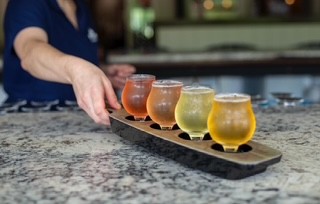
Walk into a New Hampshire cidery today and you might find a traditional dry cider made from heirloom apples, a single-variety Honeycrisp cider, a bourbon-barrel-aged cider, a cider dry-hopped with Mosaic hops, a cider made with crabapples, or a fruit-and-spice creation that doesn’t fit neatly into any old definition of cider.
And that’s one of the most exciting things happening in the state.
The New Hampshire Cider Directory from Cider Culture currently lists a dozen New Hampshire cider producers and cider-making businesses, from long-established names to newer farm-based operations. The list includes producers such as Bradford Bear, Contoocook Cider, Farnum Hill, Hermit Woods, North Country Hard Cider, Pup’s Cider, and others.
That’s a pretty remarkable amount of cider diversity for a relatively small state.
The cider renaissance is happening at the farm
One of the biggest trends we’re seeing in New Hampshire cider is a return to something very simple:
The apple matters.
More cider makers are talking about where their apples come from, what varieties they’re using, and what those apples contribute to the finished cider.
Take Contoocook Cider Company, located at Gould Hill Farm in Contoocook. The farm grows more than 80 varieties of apples across approximately 60 acres of orchard and farmland, and its cidery turns those apples into hard cider right on the farm.
That farm-to-cider connection is becoming increasingly important. It’s also one of the reasons a trip to a New Hampshire cidery can be so much more interesting than simply picking up a six-pack at the store. You’re not just drinking something made in New Hampshire.
You’re tasting a place.
Visit Gould Hill Farm & Contoocook Cider
Dry cider is having a moment
For years, American consumers often associated cider with something sweet, fruity and easy-drinking. That’s changing.
New Hampshire’s cider makers are increasingly producing ciders that are dry, crisp, tart, complex and food-friendly.
At North Country Hard Cider in Dover, for example, the current 2026 tap list includes more than 18 ciders. The lineup ranges from a dry bourbon-barrel-aged cider to a 100% Honeycrisp single-variety cider, a Golden Russet cider and a Mosaic dry-hopped cider.
That’s an impressive range—and it’s a good illustration of where modern cider is headed. Cider doesn’t have to be sweet. It can have tannin. Acidity. Texture. Earthiness. Funk. Oak. Spice. Hop character. Fruit character.
It can be every bit as interesting to explore as wine or craft beer.
Explore North Country Hard Cider
Single-variety cider is changing how we think about apples
Wine lovers already understand the concept. Cabernet Sauvignon tastes different from Pinot Noir because the grape matters. Cider is beginning to get the same treatment.
Instead of blending many apples together and simply calling the result “apple cider,” cidermakers are increasingly exploring what happens when you let one apple variety tell the story.
North Country’s current lineup includes Honey Badger, made from 100% Honeycrisp apples, as well as Tree Shaker, made from Golden Russet apples grown in Strafford, New Hampshire.
And that’s a wonderful way to start exploring cider. Try two ciders made from different apples side by side. You’ll begin to understand something important:
There isn’t one “apple flavor.”
There are hundreds of them.
New Hampshire’s forgotten apples are making a comeback
And some of the most interesting apples aren’t necessarily the ones you’ll find at the supermarket. For generations, New England was home to countless apple varieties that were planted for specific purposes—eating, cooking, keeping, or making cider. Many of those old varieties disappeared from commercial orchards because they weren’t particularly attractive, productive, or easy to ship.
But cidermakers don’t necessarily care whether an apple looks pretty. They care about what’s inside.
Sugar. Acid. Tannin. Aroma. Flavor. That’s why traditional cider apples and old New England varieties are attracting renewed attention.
Pup’s Cider, for example, has spent decades seeking out and propagating useful old apple trees, including unnamed varieties that can be particularly well suited to hard cider.
It’s a fascinating reminder that sometimes the future of cider begins by looking backward.
Farm cideries are becoming destinations
Another big change is where people are drinking cider. Increasingly, cider isn’t simply something you buy. It’s somewhere you go.
New Hampshire’s farm cideries are becoming destinations where people can combine cider with music, food, agriculture, flowers, apple picking and outdoor experiences.
Bird Dog Farm & Cider in Greenland is a great example. The family-run cidery focuses on traditional dry ciders and operates as part of a working farm experience. In 2026, the property has hosted everything from live music and food trucks to yoga, cider and flower events. And yes, there are actually thousands of dahlias growing at the farm alongside the cider operation. That’s a pretty good example of what modern New Hampshire cider can be:
agriculture + craft beverage + experience.
Cider is becoming an experience
That idea extends beyond the farm.
At Hermit Woods Winery in Meredith, cider has become an increasingly important part of the tasting-room experience. In 2026, the winery is hosting a cider-tasting weekend on the first weekend of every month, featuring a rotating selection that includes European-style dry cider, cranberry apple, crabapple, blueberry and mulled cider.
And at Gould Hill Farm, visitors can pick their own apples and then visit Contoocook Cider for cider made from apples grown right there on the property.
This is something we think is especially important:
People don’t just want to consume local products. They want to experience them.
They want to know where they came from. They want to meet the people who made them. They want to see where the apples grew. They want to taste the difference.
The numbers tell an interesting story
Cider is not immune to the challenges facing the broader alcoholic beverage industry. Nationally, the hard cider category has been relatively flat to declining in recent years, and New England has been particularly challenging.
The most recent NielsenIQ data available for the four years ending December 27, 2025 show New England hard cider sales of approximately $3 million, down from roughly $4 million in 2022. Unit sales were approximately 300,000, compared with about 400,000 in 2022.
At first glance, that’s not particularly encouraging. But there’s another side to the story. While the mass-market cider category faces pressure, craft cider is becoming more diverse, more agricultural and more experiential. In other words, the future of cider may not be about selling more of the same cider. It may be about giving people more reasons to discover cider.
That’s exactly what we’re seeing here in New Hampshire.
Cider makers are pushing the boundaries
Modern New Hampshire cider is borrowing ideas from everywhere.
From wine: single-variety ciders, vintage bottlings, barrel aging and food pairing.
From beer: hops, experimentation and taproom culture.
From the farm: local apples, seasonal ingredients and direct relationships with growers.
And from the cocktail world: fruit, herbs, spices and unexpected flavor combinations.
The result is a cider category that is becoming increasingly difficult to define—and that’s a good thing.
At North Country, you can find a cider made with Dolgo crabapples and another apple variety, a dry-hopped cider, a bourbon-barrel-aged cider and even more unconventional flavor combinations.
At Bradford Bear, you’ll find creations such as a caramel-apple cider made with birch sap and New Hampshire heirloom apples.
At Bird Dog, the emphasis is on traditional methods and dry cider.
At Contoocook, the farm itself is central to the story.
At Hermit Woods, cider becomes part of a broader craft beverage experience.
And at Rhythm, we’re exploring our own ideas about what New Hampshire cider can be.
That’s what makes this moment so interesting.
2026 is also a year to remember where New Hampshire cider came from
There is one more story that belongs in any discussion of New Hampshire cider this year.
On August 15, 2026, New Hampshire lost Ben Watson, the author, apple historian and cider advocate whose book Cider, Hard and Sweet helped introduce generations of Americans to the history, culture and craft of cider. He was 64.
Watson was much more than a writer. He was one of the people who helped connect modern American cider with its agricultural and New England roots. His influence is a reminder that today’s cider renaissance didn’t happen overnight.
It was built by farmers, orchardists, cidermakers, researchers, writers and passionate enthusiasts who believed that apples deserved more attention.
The best way to honor that legacy is to keep exploring.
So what’s next for New Hampshire cider?
If we had to describe the New Hampshire cider scene in a few words, we’d say:
More local.
More cider is connected directly to New Hampshire farms and orchards.
More diverse.
Dry, sweet, tart, barrel-aged, hopped, fruited, spiced and single-variety ciders are all finding their place.
More agricultural.
The story increasingly begins with the apple—not the can or bottle.
More experiential.
Cideries are becoming places to visit, eat, listen to music, pick apples, enjoy the outdoors and spend an afternoon.
More curious.
Consumers are beginning to ask better questions.
What apple is this?
Where did it grow?
Is it dry?
Was it barrel-aged?
Is it a single variety?
What should I eat with it?
And perhaps most importantly:
“What else is out there?”
Welcome to Cider Season
That’s exactly the question we want to encourage this fall.
Because from Labor Day through Thanksgiving, we’re declaring Cider Season in New Hampshire.
Go pick some apples. Visit an orchard. Try a cider you’ve never tasted. Visit a cidery you’ve never visited. Order a dry cider. Try a single-variety cider. Pair cider with dinner. Go to an apple festival. Talk to a farmer. Ask a cidermaker what makes their cider different. And when you’re finished exploring, come visit us at Rhythm Cider in Lincoln.
We’ll have plenty of cider waiting for you—but more importantly, we’ll have plenty for you to discover.
Because cider isn’t just a drink.
It’s an apple. A farm. A harvest. A place. A season.
It’s Cider Season.
Keep Exploring New Hampshire Cider
New Hampshire has a surprisingly diverse cider community. Here are a few places worth putting on your Cider Season list:
Visit NH’s Guide to New Hampshire Cideries
Cider Culture’s New Hampshire Cider Directory